# A New Vision Of Money - 4. Money at the service of the body, and the body at the service of money

Previously, we saw that by separating from God, we created the first and only
lack: the lack of God. This lack fragmented and transformed into thousands of
needs. These needs were projected onto the body, and now it seems that the body
is what lacks things and requires our attention. We also said that the body is
the symbol of separation. Feeling its needs and working to satisfy them is the
way to prove that separation is real.
When someone asks you to tell them about yourself, isn’t the story you tell them
the story of your body? The place and date where your body was born, the house
where your body lives, the partner your body is with, the illnesses your body
has gone through, the countries it has been to. The body is the “hero,” the
protagonist, of your movie. Everything revolves around it. We see the body as a
full-fledged person.
Since we are so deeply identified with the body, it’s natural that we want to
tend to its needs. It’s expected that we want to pamper it, protect it, and
listen to it. The body asks, and the mind obeys by seeking what is needed to
appease its desires. From this perspective, the idea that the body itself
doesn’t need anything sounds absurd. However, this is what the Course teaches.
It is explained in Chapter 27:
> The dreaming of the world takes many forms, because the body seeks in many
> ways to prove it is autonomous and real. It puts things on itself that it has
> bought with little metal discs or paper strips the world proclaims as valuable
> and good. It works to get them, doing senseless things, and tosses them away
> for senseless things it does not need and does not even _want_. It hires
> _other_ bodies, that they may protect it and collect more senseless things
> that it can call its own. It looks about for special bodies that can share its
> dream. ([CE T-27.X.2:1-5](https://acimce.app/:T-27.X.2:1-5))
What this paragraph means is that we have designed a system of thought that
teaches us its fundamental lesson: "... that it [the body] is _cause_ and not
effect, and you are _its_ effect and cannot be its cause." ([CE T-27.X.3:4](https://acimce.app/:T-27.X.3:4)).
Let us remember that the body only became part of our experience after we
decided to separate from God. The body is an effect of the mind and has never
ceased to be so. The truth of this idea is stored within us and constantly
surfaces, although we do not take it very seriously.
For example, when we hear someone judge another by their physical appearance, we
think they are a shallow person. Intuitively, we know that what is inside is
what matters. When we hear that others are treated as if they were objects, we
also feel indignation. We are inspired by stories of people who overcame their
physical limitations thanks to their willpower because deep down, we know that
the body is like a prison, and the mind longs to be free.
Through the ages we have imposed onto ourselves a system of thought that teaches
and reinforces the idea that the body is cause and the mind is its effect.
This system of thought starts with the idea that the body has its impulses and
needs, like feeling cold - an impulse that tells us the body requires clothing
and other accessories.
To procure these things, we need money, and to have money, we must work hard.
We strain the body for strips of paper, metal discs, and numbers on a bank
screen. We invent countless meaningless activities to obtain those strips of
paper. But do we stop when the need is met?

Instead of simply meeting a specific need, we end up squandering money on things
we neither want nor need. Who cannot relate to this? Who has not wasted money on
things they never used? Who has not bought things they truly did not need? We
work hard to obtain something we will later discard. What sense can this make?
Yet, this system makes so much sense to us that we use the same strips of paper
and metal discs to hire other bodies to do the work for us. Their job is to
collect “more meaningless things” for ourselves. We also look for that special
person with whom to share the illusion of acquiring more money that can be
wasted on more unnecessary things. Possessing for the sake of possessing is one
of the ego's slogans. Like everything from the ego, it ends up being circular
reasoning. Money serves the body, and the body serves money. The mind remains a
victim of this cycle.
Jesus has a good sense of irony. When seen in this light, the entire system
becomes laughable for how absurd and senseless it is. Can you see the absurdity
of it all too?
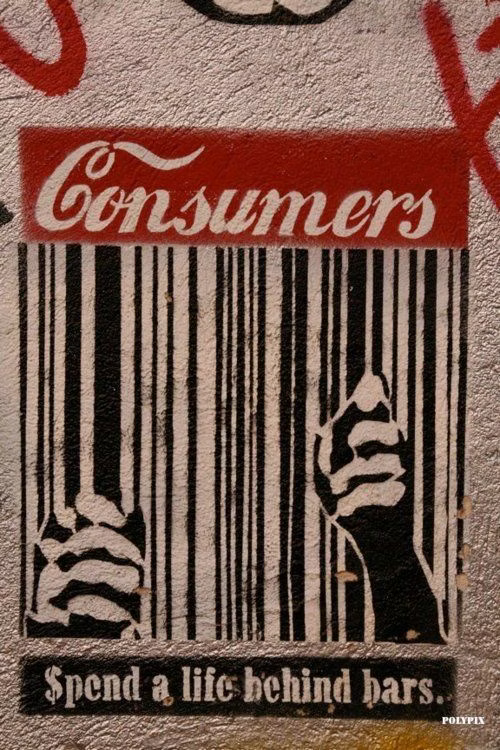
Many have dared to point out the absurdity of the system. For example, in 2008,
as a result of a financial crisis, the “Occupy” movement emerged as a way to
protest financial injustices. There are also anti-consumption movements that
highlight the absurdity and danger of centering society around the idea of
constant consumption of goods and buying products. These and many other similar
groups protest the system because they can see the harmful effects it has on
people and the environment. **However, no group points out that the real problem
is that we incorrectly believe that the body governs itself.**
In this world, we see these problems as something very serious. We think that
money is simply a fact we must live with because the body needs things. There is
no doubt that we have learned very well the central lesson this system wants to
teach us: the body is cause and not effect.
To prevent such an absurd system from spiraling out of control, we created rules
and laws to follow. The Course assures us that, although we feel bound by these
laws, we will feel deep liberation when we realize they are not really laws but
part of a madness. It says this in Lesson 76 of the Workbook:
> Think of the freedom in the recognition that you are not bound to all the
> strange and twisted laws you have set up to save you. You really think that
> you will starve unless you have stacks of green paper strips and piles of
> metal discs. You really think a small round pellet or some fluid pushed into
> your veins through a sharpened needle will ward off death. You really think
> you are alone unless another body is with you. ([CE W-76.3:2-4](https://acimce.app/:W-76.3:2-4))
> It is insanity that thinks these things. You call them laws, and put them
> under different names in a long catalog of rituals that have no use and serve
> no purpose. You think you must obey the "laws" of medicine, of economics, and
> of health. Protect the body, and you will be saved. ([CE W-76.4](https://acimce.app/:W-76.4))
> These are not laws but madness. ([CE W-76.5:1](https://acimce.app/:W-76.5:1))
There are many examples of these laws. For instance, the idea that we must earn
a living. In the psychotherapy supplement of the Course, it says that we believe
"it is ushered in by the belief that there are forces to be overcome to be alive
at all." ([P-2.V.1](https://acim.org/acim/psychotherapy/the-process-of-healing/en/s/909)).
That is, **we think that life must involve effort for it to exist**.
Another fundamental law is the law of supply and demand. In this world, supply
is always limited, and needs are said to be infinite. According to the laws of
the world, we think it is not our natural right granted by God, but a privilege
we must fight for. Since supply is limited, we think we are in competition with
others, who take away what we seek to live.
Jesus reminds us, however, that this law is madness and that by freeing
ourselves from it, we will feel deep relief.
Let us then do what he proposes. Close your eyes for a few minutes and take time
thinking about:
- how you would feel recognizing that you are not bound by the laws of
economics.
- how you would feel realizing that you don't have to make any effort to earn a
living.
- how you would feel recognizing that all those laws that seem to bind you are
madness and that only the laws of God govern you.
Observe how you feel.
Isn’t that a goal you would like to achieve? Wouldn’t you put your body in
service to this goal?
## Practice
We have already seen that we tend to focus our lives on pleasing the body and
put all our efforts into accumulating things that can satisfy it. We need to
center the mind early in the day so that the goal is different. Today, we will
introduce an additional element to our practice with this purpose. We will
dedicate ourselves to starting the day well.
### In the Morning
Dedicate about 15 minutes in the morning to the following practice:
1. Close your eyes and set your mind to look honestly, without deception.
2. Identify the beliefs you have about the laws of this world that you think you
must obey. For example: "If I don't eat, I'll die," "If I don't earn money, I
could get evicted," "If I don't take my medication, my illness will worsen,"
etc.
3. For each belief, observe how that law makes you feel, especially when you
imagine breaking it.
4. Release each belief with these words, said slowly and with full confidence
that they will take effect:
> "I believe that ---------------, but that is not true; I am governed only by
> the laws of God."
For example:
> "I believe that I would starve if I had no money, but that is not true. I am
> governed only by the laws of God."
If you practice correctly, your mind will naturally reach a state of silence
where you will find no more beliefs, and you will experience peace.
Spend the remaining time staying in that state and remind yourself that this is
the state you wish to remain in for the rest of the day.
### During the Day
Since we have accepted the system we live in as normal for so many years, it is
understandable that one morning meditation will not make it disappear
immediately. For this, we need constant practice that offers a saner
alternative.
Throughout the day, stay alert for any thought that suggests you must serve the
body or that the body must serve money. These may include thoughts of anxiety
about your work or desires to indulge the body in some craving. Be especially
mindful of thoughts related to shopping or goals you want to achieve.
Whenever you catch yourself having a thought aimed at pleasing the body or
achieving goals that serve the body, immediately respond with the truth:
> "This thing I believe I need is not what will make me happy. I will be still
> and listen to the alternative God offers me."
Always remember that the words should be spoken slowly and with attention to the
meaning they carry. For example, when you say "I will be still to listen," do
exactly that.
Additionally, set a timer on your phone to remind you every 20 minutes to keep
your focus throughout the day:
> "Today I will not waste time trying to prove to myself that the body commands
> me."
---
- [Preferred Frame Writing on GitHub.com](https://github.com/siran/writing)
(built: 2025-12-11 22:15 EST UTC-5)